
How to Layer Candle Holders for a Warmer, More Considered Space
A single candle holder, placed alone in the center of a table, rarely does much for a room. It's a nice object, but it reads as an afterthought — one small gesture in an otherwise unstyled surface. Layer three or four together, at different heights and in related but not identical forms, and the same objects suddenly do real work: they draw the eye across a surface, hold light at multiple levels, and make a room feel considered rather than simply furnished.
Layering candle holders is one of the lowest-effort, highest-return moves in home styling. It doesn't require redesigning a room or committing to a large piece of furniture — just an understanding of height, grouping, and material that most people never quite land on with their first attempt.
Vary the Height, Not Just the Object
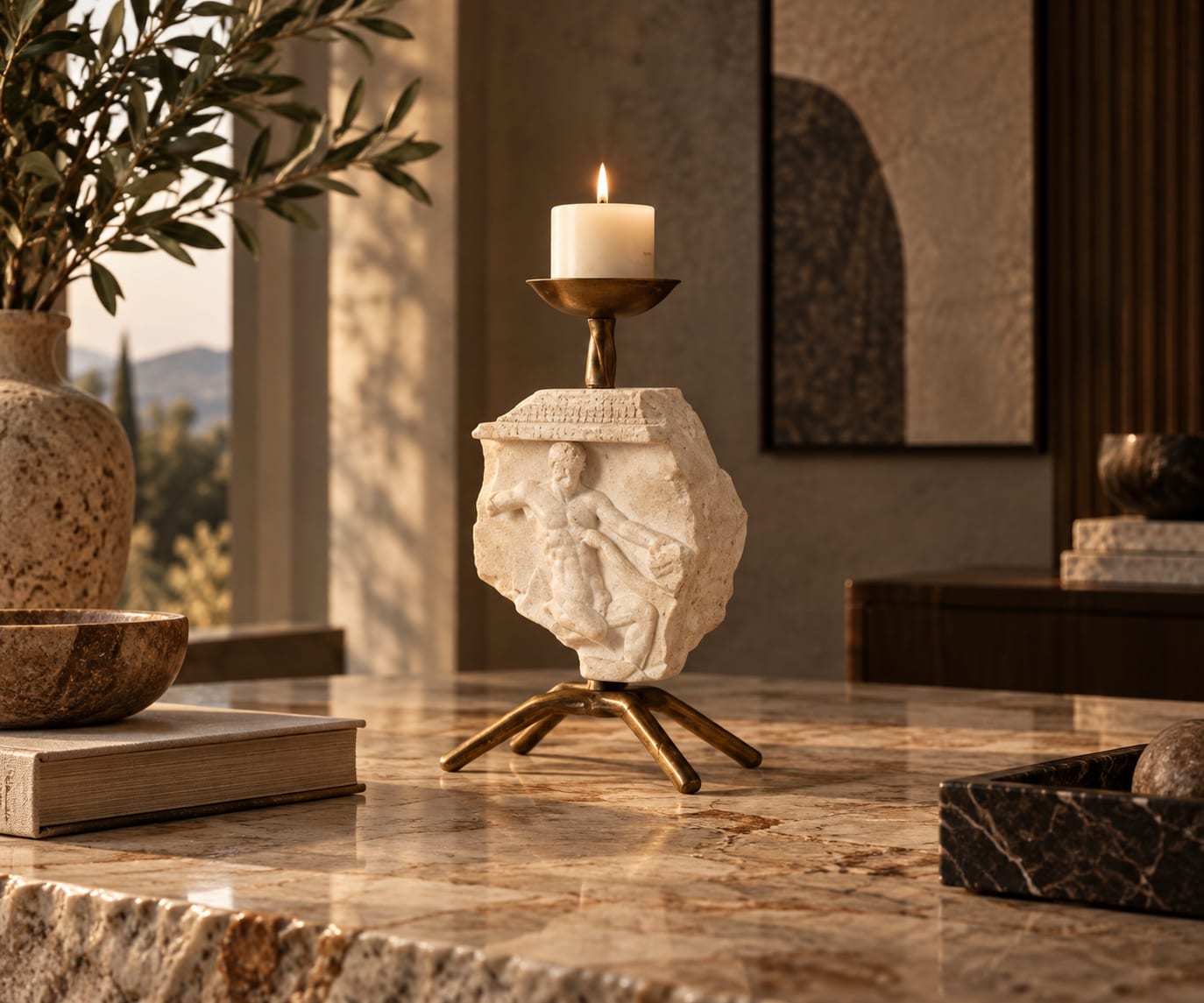
The most common styling mistake with candle holders is grouping several of near-identical height. Even with beautiful individual pieces, a flat line of matching holders reads as a set rather than a composition. The fix is straightforward: pick one tall piece, one mid-height, and one low — a pillar holder, a candle block, and a votive, for instance — and let the eye travel between them.
This is the same principle that governs any tablescape or shelf styling: uneven heights create visual rhythm, while uniform heights create a static, flat line that the eye skips over rather than lingers on.
Group in Odd Numbers
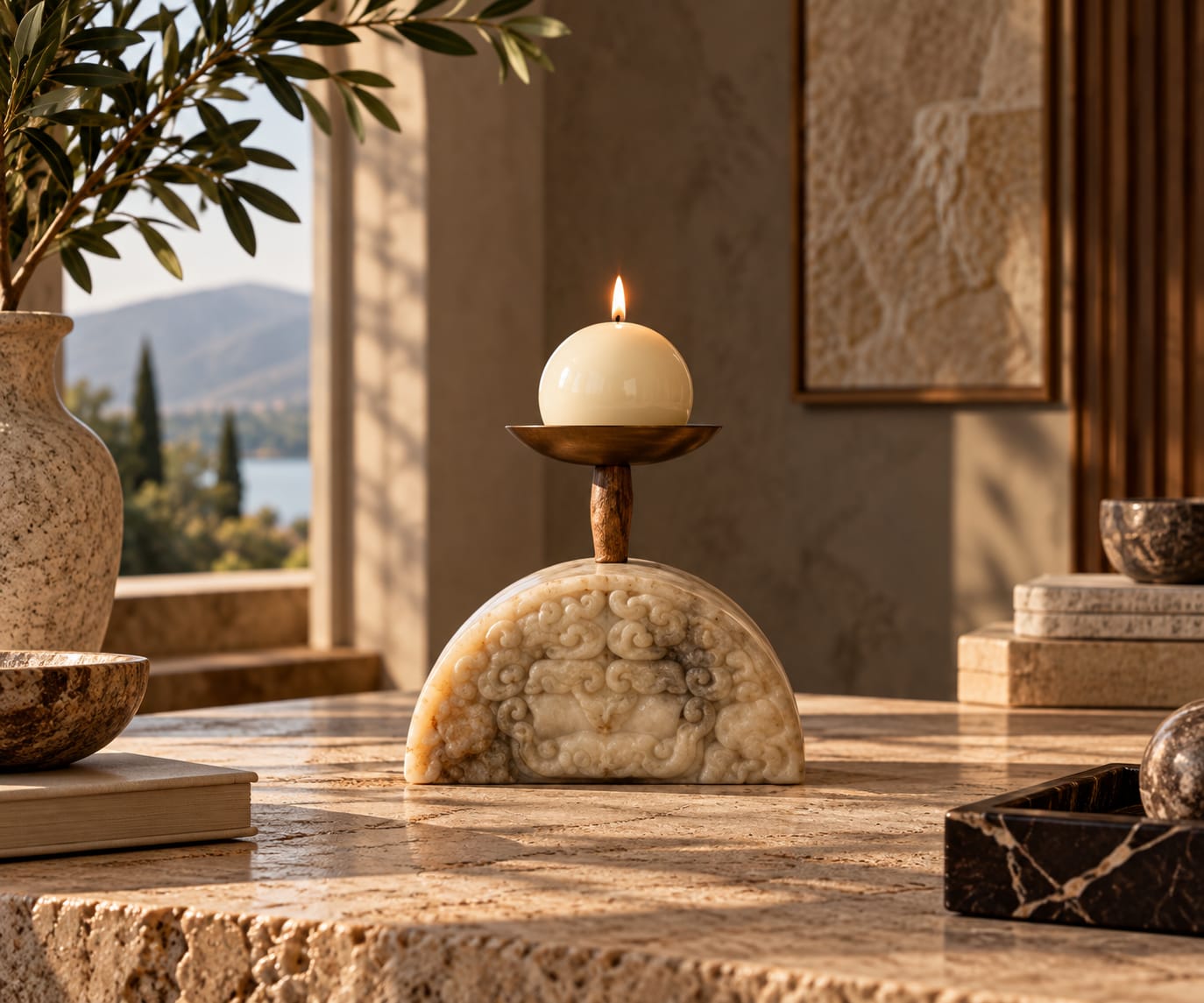
Odd-numbered groupings — three, five, occasionally seven — tend to look more intentional than even ones. Two objects placed together often read as a pair waiting for symmetry; three or five, by contrast, naturally avoid that expectation and feel like a considered arrangement rather than an incomplete one.
This holds whether the pieces are identical or varied. A cluster of three matching stone votives, placed with slightly uneven spacing rather than a perfectly straight line, already looks more deliberate than the same three candles lined up evenly.
Mix Material, Keep the Palette Close
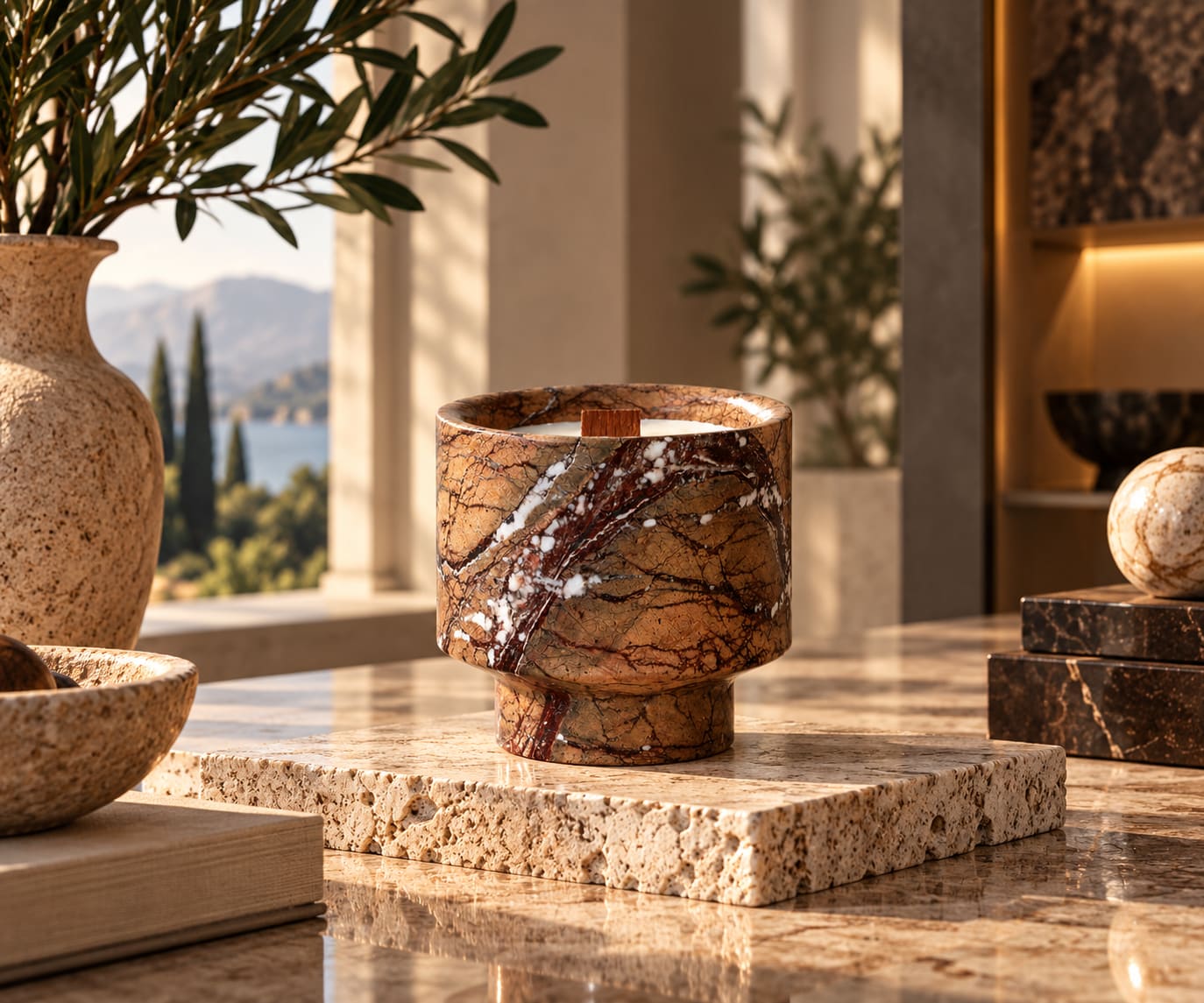
Mixing materials — stone alongside carved relief, a smooth votive next to a textured block — adds depth that a single-material grouping can't. The key is keeping the color palette within a narrow range even as the material varies. A warm stone, a cream-toned block, and a sandy votive read as a cohesive family; the same three pieces in unrelated colors read as clutter.
As a rule of thumb, one grouping should draw from no more than two or three tonal families at once — enough variation to stay visually interesting, not so much that the eye can't settle.
Conclusion
None of this requires an elaborate shopping list. Two or three well-chosen candle holders, varied in height and grouped with a little intentional unevenness, do more for a room than a single statement piece placed alone. The difference is entirely in the arrangement, not the budget.
Shop This Edit
Candle Holders, Layered

Ivory Stone Resin Fragment Candle Holder with Gold-Tone Legs
₹33,900
Carved Stone Resin Pillar Candle Holder with Black Cup
₹17,500
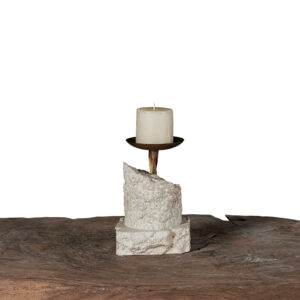
Carved Stone Resin Block Candle Holder with Black Cup
₹12,900
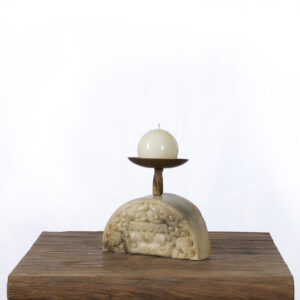
Dome Stone Resin Candle Holder with Gold-Tone Dish
₹17,900
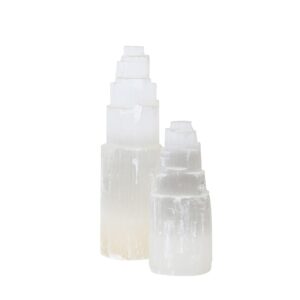
Selenite Crystal Tower Candle Holder
From ₹5,000

Brown Veined Natural Stone Scented Candle
₹3,900
Luxury Candle Holders, Curated Online
Searching for luxury candle holders in India tends to surface either mass-produced glass tealight sets or generic metal stands, with very little in between. At Valdéra Collective, our edit of luxury candleware is built around hand-finished stone resin, natural marble and stone pieces — objects substantial enough to anchor a table or shelf on their own, and considered enough to layer into a genuine grouping.
Our range of candle holders and votives spans accessible pieces suited to building a full grouping — natural stone scented candles, marble and glass candle holders — through to more elevated statement pieces, like our carved stone-resin pillar and relief candle holders, built to anchor a room on their own. Whether you're starting a first grouping or adding depth to an existing one, our collection covers both ends of that range.
If you're planning a candle holder refresh for your dining table, console, or mantel, the layering guide above covers the height, grouping, and material decisions that make the biggest visual difference — and our edit above is a strong starting point for a considered, unmatched-but-cohesive set.
Common Questions